
TB
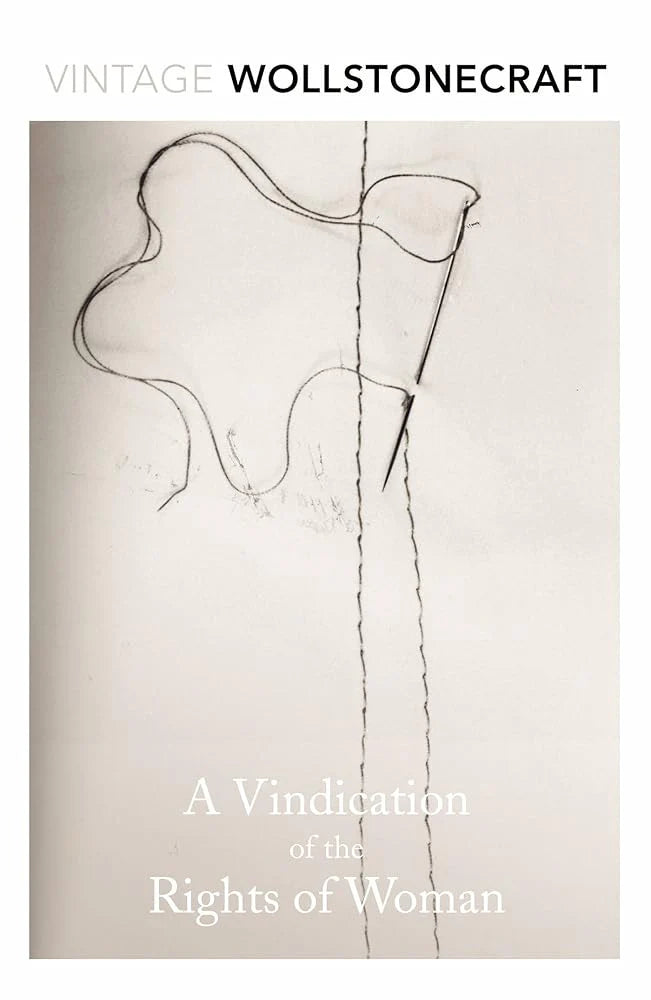
A Vindication of the Rights of Woman By Mary Wollstonecraft
A Vindication of the Rights of Woman By Mary Wollstonecraft
Couldn't load pickup availability
A Vindication of the Rights of Woman (1792) by Mary Wollstonecraft is one of the earliest and most influential works of feminist philosophy. The book is a powerful political and moral argument advocating for the education, independence, and rational equality of women in society. Written during the intellectual ferment of the late Enlightenment, Wollstonecraft’s treatise challenges the prevailing beliefs of her time that women were naturally inferior to men. Instead, she argues that women only appear inferior because they are denied the same educational opportunities and social responsibilities given to men. 📚✨
The work was written partly as a response to educational and philosophical ideas circulating in the late 18th century—particularly the notion that women should be trained mainly to please men and maintain domestic charm rather than cultivate intellect and moral strength. Wollstonecraft strongly rejects this perspective. She insists that women are rational human beings capable of virtue, reason, and civic responsibility. According to her argument, the supposed weaknesses of women—such as vanity, emotional excess, and dependency—are not natural traits but the direct results of poor education and restrictive social expectations.
At the heart of the book is Wollstonecraft’s belief that education is the foundation of equality. She proposes a radical idea for her era: that girls and boys should receive a similar education based on reason, science, morality, and critical thinking. In her view, women should not be trained merely in superficial accomplishments like music, dancing, and ornamental behavior meant to attract husbands. Instead, they should develop their intellect and moral character so they can become independent individuals, capable mothers, responsible citizens, and thoughtful companions in marriage.
Wollstonecraft also critiques the social structures that encourage women to prioritize beauty and charm over intellect. She argues that society encourages women to behave like decorative objects—valued for their appearance rather than their minds. This, she claims, harms both women and men. Women become dependent and manipulative in order to survive within restrictive roles, while men lose the opportunity to form genuine partnerships with intellectually equal companions. For Wollstonecraft, a healthy society requires relationships built on mutual respect, rational friendship, and moral equality.
Another central theme of the book is virtue. Wollstonecraft argues that virtue must be universal; it cannot have one standard for men and another for women. In the society she critiques, men are encouraged to pursue ambition, intellect, and independence, while women are encouraged to cultivate obedience and submissiveness. She believes this double standard undermines true morality. Women, she insists, should pursue the same moral and intellectual virtues as men, because virtue arises from reason and personal responsibility—not from gender.
Marriage is another topic Wollstonecraft examines in detail. She criticizes marriages built on economic dependence and superficial attraction, which often reduce women to a position similar to property. Instead, she envisions marriage as a partnership between equals, where both individuals respect each other's intellect and moral character. In such a relationship, love would be based not merely on passion but on friendship, trust, and shared values.
The book also explores the role of women as mothers and educators of future generations. Wollstonecraft believes that improving women's education will ultimately improve society as a whole because educated mothers will raise rational and virtuous children. She sees women's empowerment not as a threat to social stability but as a necessary step toward building a more just and enlightened society.
Stylistically, the work blends philosophy, political theory, social criticism, and moral reflection. Wollstonecraft writes passionately and directly, often challenging prominent thinkers of her time and criticizing the cultural norms that restrict women’s development. Her tone ranges from analytical to fiery, reflecting both intellectual rigor and deep frustration with the injustices she observes.
Although the book was controversial when first published, its influence has grown enormously over time. Today, it is widely regarded as a foundational text of feminist thought and a key contribution to Enlightenment philosophy. Wollstonecraft’s arguments helped shape later movements for women’s education, legal rights, and political participation.
In essence, A Vindication of the Rights of Woman argues that women deserve equality not simply because of compassion or social reform, but because reason, justice, and human dignity demand it. Wollstonecraft’s vision was revolutionary for the 18th century: a world where women are educated, independent, morally responsible individuals who participate fully in intellectual and civic life alongside men. 🌍📖
Our customer's Reviews:
Thank you grey.np for quick delivery and for the bookmarks as well
- stutisinghbasnet -
-
Exchange Policy
For Any Damages Or Quality Issues We Do Make an Exchange For Upto 30 days From Date Of Delivery.
-
Social Impact
For Every 1 Order Placed We Contribute 1 Meal to Our Family From Old Age Homes
-
Delivery Timing
The Delivery Will Be Within 48 hours If Not Same day.
-
Customer Support
Call and message support is available between 10 am- 6 Pm, Sunday To Friday.