
TB
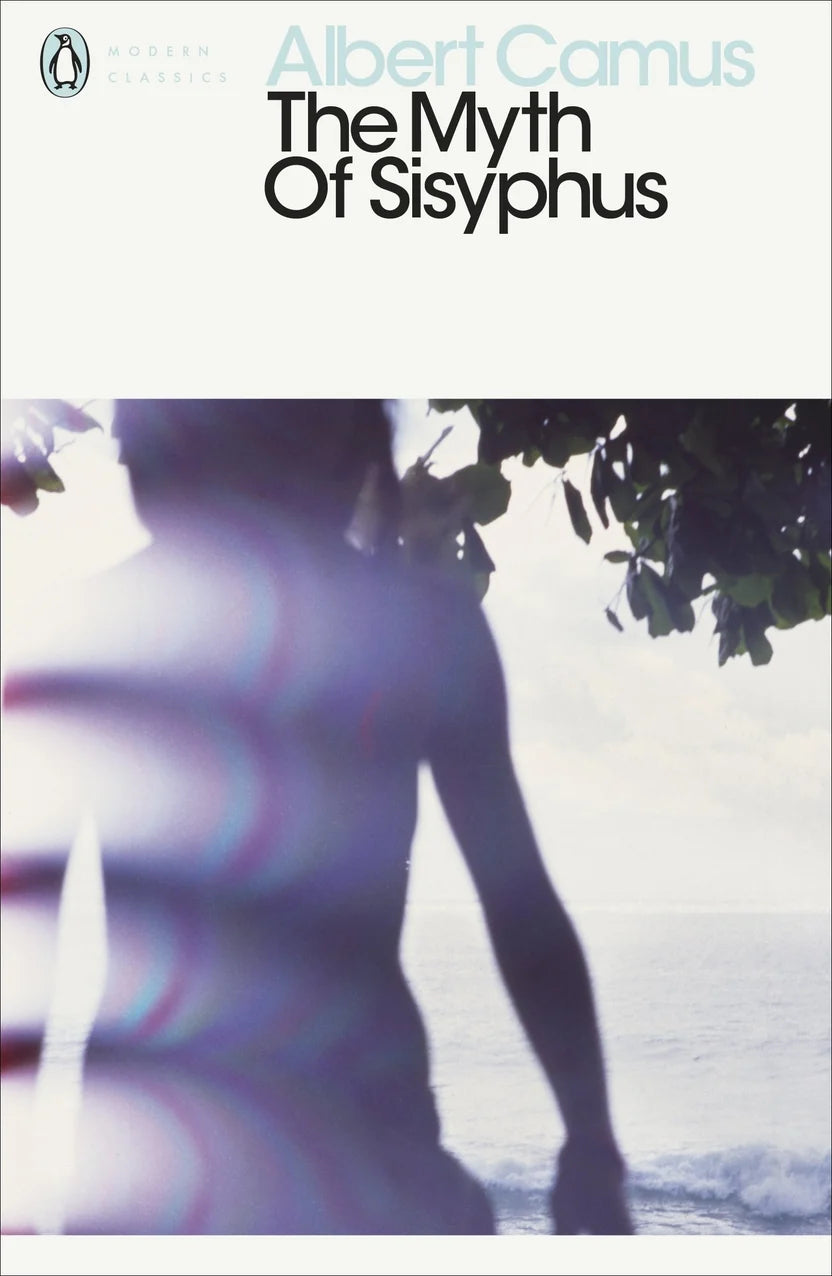
Myth Of Sisyphus By Albert Camus,Justin O'Brien (Translator)
Myth Of Sisyphus By Albert Camus,Justin O'Brien (Translator)
Couldn't load pickup availability
The Myth of Sisyphus by Albert Camus, translated by Justin O’Brien, is one of the most influential philosophical works of the 20th century. First published in French as Le Mythe de Sisyphe, this landmark essay explores one of the deepest questions in human existence: If life has no inherent meaning, how should we live?
Written with clarity, intensity, and philosophical insight, The Myth of Sisyphus examines the concept of the “absurd,” the conflict between humanity’s desire to find meaning and the apparent indifference of the universe. Albert Camus argues that human beings naturally search for purpose, order, and significance, yet the world does not necessarily provide the answers we seek. From this tension emerges what Camus calls the absurd.
Rather than treating the absence of absolute meaning as a reason for despair, Camus challenges readers to confront the absurd honestly and continue living with awareness, freedom, and determination. His philosophy encourages us to recognize life’s uncertainties without escaping into false hopes or unquestioned beliefs. In this sense, The Myth of Sisyphus is not simply a philosophical examination of meaninglessness; it is also a powerful reflection on human freedom, consciousness, choice, and the value of living.
At the heart of the book is the legendary figure of Sisyphus, a character from Greek mythology condemned by the gods to push an enormous stone up a mountain, only to watch it roll back down and repeat the task for eternity. Camus transforms this ancient myth into a powerful philosophical metaphor for the human condition. Sisyphus represents the individual who repeatedly confronts the same struggles, routines, disappointments, and limitations yet continues to move forward.
Camus famously asks whether Sisyphus can be imagined as happy. His answer forms one of the central ideas of the book: even when existence appears repetitive or meaningless, a person can still embrace life through conscious acceptance and rebellion against the absurd. Sisyphus becomes a symbol of human perseverance, resilience, and the determination to live despite uncertainty.
The Myth of Sisyphus also explores the philosophical question of suicide. Camus considers whether recognizing the absurd should logically lead a person to conclude that life is not worth living. Through his examination, he develops an alternative to both despair and attempts to escape the absurd. Instead of eliminating the problem, Camus proposes that we confront it directly and live fully within its reality.
A major theme throughout the book is philosophical rebellion. For Camus, rebellion does not necessarily mean political revolution or physical resistance. It can mean the conscious decision to continue living, thinking, questioning, and experiencing life despite the absence of a guaranteed ultimate purpose. This attitude allows individuals to experience a form of freedom that comes from recognizing the limits of human knowledge and refusing to surrender to despair.
Camus also examines several philosophical thinkers and literary figures while developing his ideas about absurdity and existence. His discussion moves between philosophy, literature, mythology, and human experience, making the book an important introduction to existential and absurdist thought. Although often associated with existentialism, Camus developed a distinct philosophical position centered on absurdity, rebellion, freedom, and the affirmation of life.
The translation by Justin O’Brien makes Camus’s philosophical ideas accessible to English-speaking readers while preserving the seriousness and literary character of the original work. O’Brien’s translation has played an important role in introducing generations of readers to Camus’s distinctive approach to philosophy and literature.
The Myth of Sisyphus is particularly valuable for readers interested in existentialism, absurdism, philosophy, psychology, literature, and the meaning of life. It encourages readers to question assumptions about purpose, happiness, morality, freedom, and existence. Rather than offering simple answers, Camus invites readers to think more deeply about what it means to be human in a world that may not provide the certainty we desire.
For students of philosophy, The Myth of Sisyphus provides an important foundation for understanding Albert Camus and the philosophical movement associated with absurdism. For general readers, it offers a thought-provoking exploration of questions that remain relevant in modern life. The book speaks to anyone who has experienced uncertainty, repetition, loneliness, disappointment, or the feeling that everyday life lacks a clear purpose.
One of the enduring strengths of The Myth of Sisyphus is its ability to transform an ancient myth into a modern philosophical reflection. Sisyphus’s endless labor becomes a mirror through which readers can examine their own routines and struggles. Work, relationships, ambitions, failures, responsibilities, and everyday repetition can sometimes appear like an endless cycle. Camus asks readers not simply to escape this cycle but to become conscious of it and consider how freedom can exist within it.
The book’s central message remains powerful because it does not depend on a particular historical period. People continue to ask whether life has meaning, whether happiness is possible in an uncertain world, and how individuals should respond when their expectations conflict with reality. Camus’s philosophy offers a provocative response: instead of waiting for the universe to provide a final answer, we can acknowledge uncertainty and still choose to live, experience, create, and act.
The Myth of Sisyphus by Albert Camus is therefore much more than an academic philosophical essay. It is a challenging and deeply reflective work about existence, consciousness, freedom, suffering, happiness, and the human desire for meaning. Its ideas have influenced philosophy, literature, psychology, cultural studies, and modern discussions about existentialism and absurdism.
Whether you are discovering Albert Camus for the first time or exploring philosophical questions about the meaning of life, The Myth of Sisyphus offers an unforgettable intellectual journey. It challenges readers to confront difficult questions without easy answers and to consider how a meaningful life might be lived even when ultimate meaning remains uncertain.
Book Title: The Myth of Sisyphus
Author: Albert Camus
Translator: Justin O’Brien
Original Title: Le Mythe de Sisyphe
Genre: Philosophy, Existentialism, Absurdism, Essays
Themes: The Absurd, Meaning of Life, Suicide, Freedom, Rebellion, Consciousness, Happiness, Human Existence
SEO Keywords: The Myth of Sisyphus, The Myth of Sisyphus by Albert Camus, Albert Camus books, Albert Camus philosophy, Justin O’Brien translation, The Myth of Sisyphus book, absurdism, existentialism, philosophy books, meaning of life, philosophy of existence, absurd philosophy, Sisyphus philosophy, Camus philosophy, books about the meaning of life, classic philosophy books, philosophical essays, human existence, freedom and absurdity, philosophical books for beginners, famous philosophy books, classic literature and philosophy.
Our customer's Reviews:
Thank you grey.np for quick delivery and for the bookmarks as well
- stutisinghbasnet -
-
Exchange Policy
For Any Damages Or Quality Issues We Do Make an Exchange For Upto 30 days From Date Of Delivery.
-
Social Impact
For Every 1 Order Placed We Contribute 1 Meal to Our Family From Old Age Homes
-
Delivery Timing
The Delivery Will Be Within 48 hours If Not Same day.
-
Customer Support
Call and message support is available between 10 am- 6 Pm, Sunday To Friday.