
TB
Spring Snow By Yukio Mishima, Michael Gallagher (Translator)
Spring Snow By Yukio Mishima, Michael Gallagher (Translator)
Couldn't load pickup availability
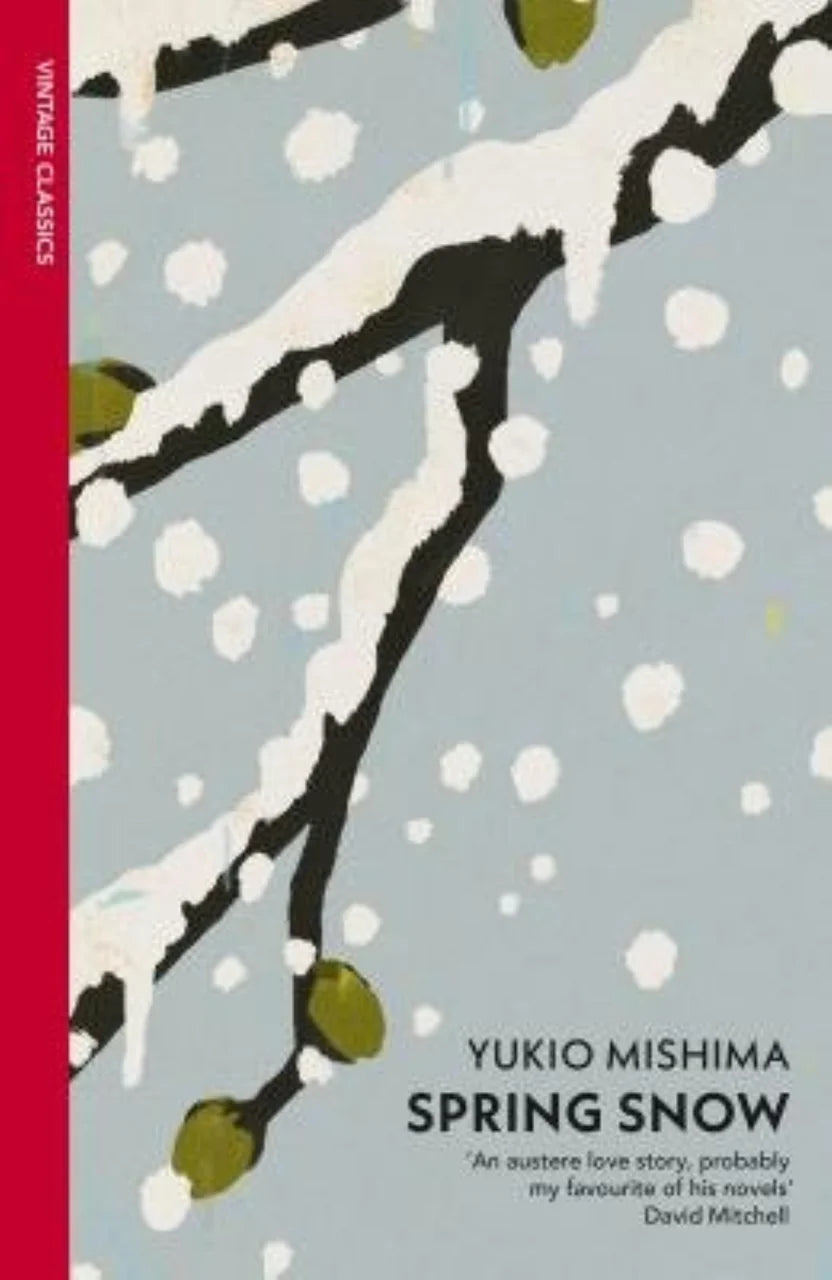
Spring Snow by Yukio Mishima, Translated by Michael Gallagher
Spring Snow by Yukio Mishima, translated by Michael Gallagher, is a beautifully written and emotionally intense Japanese literary novel that explores forbidden love, social class, tradition, ambition, beauty, jealousy, and the inevitable passage of time. Set in Japan during the early twentieth century, this acclaimed novel combines elegant prose with a deeply moving story of romance and tragedy, making it an essential read for anyone interested in Japanese literature, historical fiction, classic romance, and literary fiction.
The first novel in Mishima's celebrated The Sea of Fertility tetralogy, Spring Snow introduces readers to a world where aristocratic traditions, changing social values, and personal desires collide. At the heart of the story are Kiyoaki Matsugae and Satoko Ayakura, two young people whose relationship is shaped by passion, pride, social expectations, and circumstances beyond their control. Their complicated love story unfolds against the refined backdrop of Japan's aristocratic society, creating a powerful contrast between youthful emotion and rigid cultural conventions.
Yukio Mishima is renowned for his sophisticated writing, philosophical themes, vivid descriptions, and exploration of beauty, death, desire, and human identity. In Spring Snow, these qualities come together in a novel that is both intimate and expansive. Mishima carefully portrays the emotional world of his characters while also capturing a society undergoing significant cultural and political change.
A Story of Love, Desire, and Social Expectations
At the center of Spring Snow is the complicated relationship between Kiyoaki Matsugae and Satoko Ayakura. Kiyoaki is a young man born into privilege, while Satoko belongs to an aristocratic family whose traditions and social position influence the choices available to her.
Their relationship is filled with attraction, emotional uncertainty, pride, misunderstandings, and longing. Although their feelings for one another become increasingly powerful, the expectations of family and society make their relationship extraordinarily difficult.
Mishima uses their relationship to examine the tension between individual desire and social responsibility. The characters must navigate a world in which marriage, reputation, family honor, and social status can determine the course of a person's life. Their emotional struggle becomes a reflection of a larger conflict between personal freedom and traditional expectations.
Japan in a Time of Change
One of the most fascinating aspects of Spring Snow is its historical setting. The novel takes place during the early twentieth century, a period when Japan was experiencing profound changes in its relationship with tradition, modernity, Western influence, and its own historical identity.
Mishima presents a society caught between two worlds. Traditional aristocratic customs continue to influence everyday life, while modern ideas and social changes gradually reshape Japanese culture.
This historical background gives the novel greater depth. The characters' personal experiences are connected to a society that is itself changing. Their struggles with love, identity, duty, and tradition mirror the broader transformation taking place around them.
Beauty and Tragedy
Beauty plays an important role throughout Spring Snow. Mishima's writing is known for its attention to visual detail, atmosphere, elegance, and symbolism, and this novel is a particularly rich example of his literary style.
The changing seasons, gardens, clothing, ceremonies, landscapes, and moments of quiet reflection contribute to the novel's distinctive atmosphere. Beauty is not presented simply as something pleasant or decorative. Instead, it is often connected with desire, impermanence, loss, and mortality.
The title itself evokes the fragile nature of beauty. Spring suggests renewal, youth, and possibility, while snow suggests coldness, transience, and disappearance. This contrast reflects many of the novel's central themes.
A Deeply Psychological Novel
Beyond its romantic storyline, Spring Snow is a deeply psychological exploration of its characters. Kiyoaki's personality is marked by sensitivity, pride, emotional complexity, and uncertainty. His actions and reactions reveal the difficulties of understanding one's own desires and emotions.
Satoko is equally complex. Her character reflects the limitations placed upon women within the social structures of her time, while also demonstrating emotional strength and determination.
Mishima does not reduce his characters to simple heroes or villains. Instead, he presents them as complicated human beings whose decisions are influenced by love, pride, fear, social expectations, and personal weakness.
Themes Explored in Spring Snow
Spring Snow explores a wide range of themes that continue to make the novel relevant to modern readers.
Love and Forbidden Romance:
The novel examines how love can become complicated when social expectations and family obligations stand in the way of personal desire.
Tradition vs. Modernity:
Mishima portrays a Japan undergoing cultural transformation and explores what happens when traditional values encounter changing ideas.
Beauty and Impermanence:
The novel repeatedly connects beauty with fragility and the inevitable passage of time.
Youth and Loss:
The intensity of youth is contrasted with the realities of aging, change, separation, and mortality.
Social Class and Aristocracy:
Family background and social status play an important role in determining the characters' relationships and opportunities.
Desire and Jealousy:
Mishima explores how attraction, possessiveness, uncertainty, and jealousy can influence human behavior.
Fate and Choice:
The characters constantly struggle between the choices they want to make and the circumstances that seem to determine their futures.
Death and Transience:
Like much of Mishima's literature, Spring Snow considers the relationship between beauty, life, death, and impermanence.
About Yukio Mishima
Yukio Mishima was one of Japan's most influential and internationally recognized twentieth-century writers. Known for his novels, short stories, essays, and plays, Mishima developed a distinctive literary style characterized by precise imagery, philosophical depth, psychological intensity, and an enduring fascination with beauty and mortality.
His works frequently examine conflicts between tradition and modernity, individual identity and social expectations, physical beauty and spiritual ideals, and desire and death.
Spring Snow is among his most important novels and serves as the opening volume of The Sea of Fertility, a four-part literary cycle that follows interconnected stories across different periods of Japanese history.
About the Translation
This edition is translated by Michael Gallagher, allowing English-language readers to experience Mishima's richly detailed narrative and sophisticated storytelling.
Translation is particularly important in a novel such as Spring Snow, where atmosphere, emotional nuance, symbolism, and descriptive language contribute significantly to the reading experience. Gallagher's translation makes Mishima's story accessible to an international audience while preserving the novel's literary character.
Why Read Spring Snow?
Spring Snow is an excellent choice for readers who enjoy Japanese literature, classic novels, historical fiction, tragic romance, literary fiction, philosophical fiction, and character-driven stories.
Readers interested in Japanese culture and history will find the novel especially rewarding because Mishima creates a detailed portrait of aristocratic society during a period of cultural transition. Readers who enjoy emotionally complex romances will appreciate the relationship between Kiyoaki and Satoko, while those interested in literary fiction will find numerous themes to explore beneath the surface of the story.
The novel is also an ideal introduction to Mishima's writing and to The Sea of Fertility series. Its combination of romance, history, psychology, symbolism, and philosophical reflection gives it a distinctive place in modern Japanese literature.
Who Should Read This Book?
Spring Snow is recommended for readers who enjoy:
• Japanese literature and culture
• Classic and contemporary literary fiction
• Historical novels set in Japan
• Tragic and forbidden romance
• Complex character relationships
• Philosophical and psychological fiction
• Stories about tradition and modernity
• Novels exploring beauty and mortality
• Japanese aristocratic history and society
• Yukio Mishima's other works
• The Sea of Fertility series
• Richly descriptive and atmospheric storytelling
Final Thoughts
Spring Snow is far more than a love story. It is an elegant and haunting exploration of youth, desire, beauty, social expectation, cultural change, and the unavoidable movement of time. Through the relationship between Kiyoaki and Satoko, Yukio Mishima creates a story in which private emotions become inseparable from the traditions and structures of the society surrounding them.
With its beautiful descriptions, psychological complexity, historical setting, and tragic emotional power, Spring Snow remains one of Yukio Mishima's most memorable works. For readers seeking a sophisticated Japanese novel that combines romance with philosophical and historical depth, this book offers a compelling and unforgettable literary experience.
Book Title: Spring Snow
Author: Yukio Mishima
Translator: Michael Gallagher
Series: The Sea of Fertility
Genre: Japanese Literature, Literary Fiction, Historical Fiction, Romance, Classic Fiction
Themes: Love, Beauty, Tradition, Modernity, Aristocracy, Desire, Youth, Fate, Mortality, Social Expectations
If you are looking for a beautifully written Japanese classic filled with romance, cultural detail, emotional complexity, and profound reflections on beauty and impermanence, Spring Snow by Yukio Mishima is a remarkable addition to any reader's collection.
Our customer's Reviews:
Thank you grey.np for quick delivery and for the bookmarks as well
- stutisinghbasnet -
-
Exchange Policy
For Any Damages Or Quality Issues We Do Make an Exchange For Upto 30 days From Date Of Delivery.
-
Social Impact
For Every 1 Order Placed We Contribute 1 Meal to Our Family From Old Age Homes
-
Delivery Timing
The Delivery Will Be Within 48 hours If Not Same day.
-
Customer Support
Call and message support is available between 10 am- 6 Pm, Sunday To Friday.