
TB
Strange Houses By Uketsu,Jim Rion
Strange Houses By Uketsu,Jim Rion
Couldn't load pickup availability
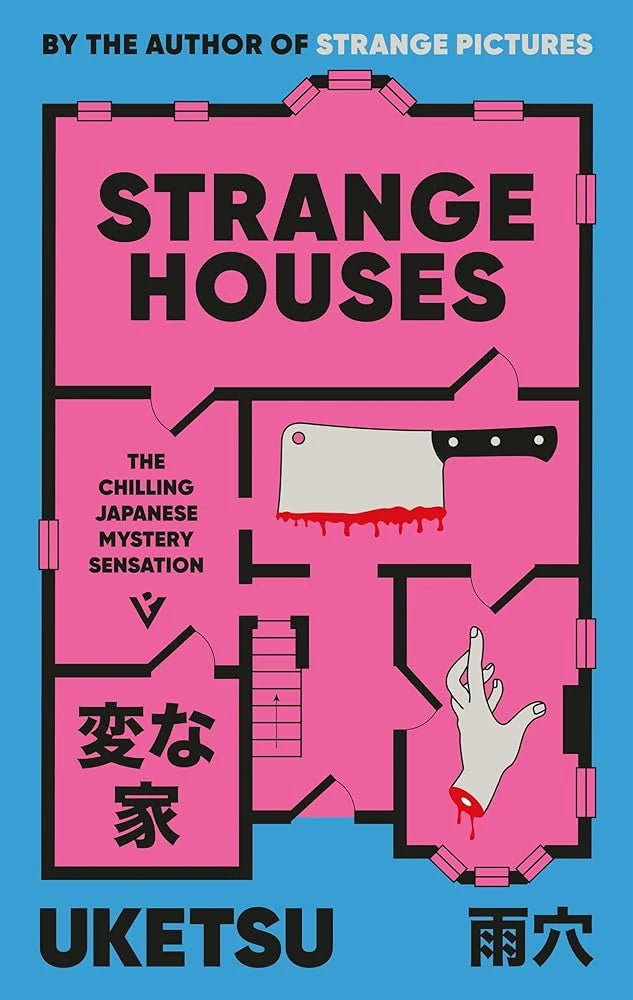
Strange Houses by Uketsu, Translated by Jim Rion
Strange Houses by Uketsu, translated from Japanese by Jim Rion, is a chilling and highly original Japanese mystery-horror novel that transforms something as ordinary as a house floor plan into a disturbing puzzle filled with secrets, hidden spaces, unexplained deaths, and terrifying possibilities. First published in Japan and later released in English in 2025, the novel has attracted international attention for its unusual combination of psychological horror, crime mystery, architectural puzzles, and interactive-style storytelling. The English edition is approximately 208 pages.
At the heart of Strange Houses is a seemingly ordinary house in Tokyo. From the outside and at first glance, the property appears bright, spacious, and suitable for a family home. However, when its floor plan is examined carefully, something immediately feels wrong. There is an unexplained dead space hidden between the walls, along with unusual architectural features that seem difficult to justify through normal construction or design. What might initially appear to be an innocent architectural oddity gradually begins to suggest something far more sinister.
The story follows a writer with an interest in strange and macabre subjects who becomes involved in investigating the mysterious property. Unable to explain the unusual design on his own, he turns to his friend Kurihara, an architect, for another perspective. Together, they begin examining the house's floor plan in extraordinary detail. Room by room, wall by wall, and space by space, they discover architectural inconsistencies that raise increasingly disturbing questions.
Why does the house contain a space that appears to serve no ordinary purpose? Why are certain rooms and passages arranged in such an unusual way? Could the strange design have been intentional? And if the house was deliberately constructed this way, what was it actually designed to accomplish?
As the investigation progresses, the mystery becomes considerably darker. The strange architecture appears to be connected to the former inhabitants of the house, some of whom have disappeared without a clear explanation. The discovery of a body and the arrival of a young woman with information about another mysterious house expand the investigation beyond a single property. What initially seems like an isolated architectural mystery begins to resemble part of a much larger and more disturbing pattern.
One of the most distinctive features of Strange Houses is the way floor plans become part of the mystery itself. Rather than simply describing a haunted or dangerous building, Uketsu encourages readers to examine the architectural layouts as clues. The diagrams are not merely illustrations accompanying the story; they are essential pieces of evidence. Readers are encouraged to study doors, rooms, walls, windows, empty spaces, and unusual connections between different areas in order to understand what might really be happening.
This creates an unusual reading experience in which the reader is almost placed in the role of an investigator. Instead of passively receiving information, you are invited to look for patterns and question the logic of the buildings. A seemingly insignificant detail in one floor plan may acquire an entirely different meaning later. A strange room that initially appears meaningless may become an important clue. A structural feature that seems impossible to explain may reveal a connection to an earlier event.
The novel's greatest strength lies in this gradual accumulation of clues. Uketsu does not rely exclusively on conventional horror techniques. Instead, the sense of fear develops through curiosity, uncertainty, deduction, and revelation. The ordinary concept of a family home becomes increasingly unsettling as the reader begins to realize that architecture itself may conceal evidence of terrible acts.
Strange Houses blends several genres, including Japanese mystery fiction, psychological horror, crime fiction, domestic thriller, suspense, and amateur detective fiction. Its unusual structure gives it a puzzle-box quality: the closer the reader looks, the more complicated the mystery becomes. The book's atmosphere is unsettling without depending entirely on traditional supernatural horror, making the story particularly appealing to readers who enjoy mysteries in which seemingly ordinary details eventually reveal something deeply disturbing.
The novel also explores darker ideas surrounding family secrets, disappearance, violence, inheritance, hidden spaces, and the relationship between people and the places they inhabit. A house normally represents safety, privacy, and family. Uketsu turns that familiar idea upside down. In Strange Houses, walls can hide evidence, rooms can conceal intentions, and a carefully designed home can become a mechanism for something horrifying.
Another important element is the novel's investigative partnership between the writer and Kurihara. The writer approaches the mystery from a curious and narrative perspective, while Kurihara's architectural knowledge provides a more analytical way of interpreting the floor plans. Their investigation allows readers to consider the mystery from multiple perspectives while gradually connecting architectural clues with human behavior.
The result is a novel that feels like a mixture of a detective case file, an architectural puzzle, and a psychological horror story. Readers who enjoy solving mysteries may find themselves stopping to examine the floor plans and reconsider earlier details. Readers who prefer horror may appreciate the growing realization that the most frightening aspects of the story may not come from ghosts or supernatural creatures, but from what people are capable of deliberately creating and concealing.
Uketsu's distinctive presentation has also contributed to the book's unusual appeal. The author is known as an enigmatic Japanese internet personality and mystery-horror creator who appears publicly wearing a white mask and digitally altered voice. His identity remains unknown. Strange Houses was one of his major Japanese successes and helped establish his distinctive approach to combining visual clues with mystery and horror.
The English translation is by Jim Rion, a translator who has lived in Japan since 2004 and has worked extensively on Japanese cultural, crime, mystery, and horror literature. His translation brings Uketsu's unusual Japanese mystery to English-language readers while retaining the investigative and unsettling character of the original work.
Why Read Strange Houses?
Strange Houses is an excellent choice for readers who enjoy:
-
Japanese mystery and thriller novels
-
Psychological horror
-
Crime and detective fiction
-
Dark and atmospheric mysteries
-
Architectural puzzles and unusual floor plans
-
Books where readers must piece together clues
-
Unreliable or incomplete information
-
Hidden rooms and secret spaces
-
Domestic mysteries involving families and houses
-
Slow-building suspense and disturbing revelations
-
Puzzle-box mysteries with unexpected connections
-
Japanese horror and contemporary translated fiction
What makes the book particularly memorable is its ability to make architecture feel mysterious and frightening. A normal hallway, an oddly positioned window, an inaccessible room, or a seemingly useless gap between walls can become a clue to a much larger mystery. The reader is constantly encouraged to look closer and ask whether the house is really what it appears to be.
Rather than presenting a mystery entirely through conventional chapters of investigation, Uketsu uses the physical structure of the houses as a storytelling device. The floor plans allow the reader to participate in the investigation, creating a more immersive experience. You are not simply told that something is wrong with a building—you are given the opportunity to examine the evidence and try to understand it yourself.
As the different pieces begin to connect, the story develops an increasingly disturbing sense of inevitability. What begins as curiosity about an unusual floor plan gradually becomes a much more serious investigation involving missing people, suspicious circumstances, disturbing discoveries, and secrets that have been concealed within seemingly ordinary homes.
Strange Houses is therefore more than a conventional haunted-house story. It is a carefully constructed mystery about the secrets that can be hidden inside buildings and the even darker secrets that can be hidden inside families. Its combination of architectural investigation, psychological suspense, crime mystery, and horror gives the novel a distinctive identity within contemporary mystery fiction.
For readers who enjoy books that make them actively think, Strange Houses offers a particularly engaging experience. Every unusual feature of a house may matter. Every empty space may have a purpose. Every architectural inconsistency may be another piece of evidence. And every answer may lead to another question.
Ultimately, Strange Houses asks the reader to look at familiar spaces differently. A home may appear safe because its rooms, doors, windows, and walls seem ordinary. But when those elements are arranged with a hidden purpose, the same house can become a puzzle—and potentially a trap.
Strange Houses by Uketsu, translated by Jim Rion, is a dark, inventive, and unsettling mystery for anyone fascinated by hidden rooms, strange architecture, psychological horror, crime investigations, and puzzles that demand careful attention. If you enjoy mysteries where the smallest details can change the entire meaning of the story, this eerie Japanese bestseller offers a uniquely immersive reading experience.
Book Details
Title: Strange Houses
Author: Uketsu
Translator: Jim Rion
Original Language: Japanese
English Publication: 2025
Publisher: HarperCollins / HarperVia; Pushkin Press editions are also available
Length: Approximately 208 pages
Genres: Mystery, Horror, Psychological Thriller, Crime Fiction, Suspense, Domestic Thriller, Japanese Literature
ISBN: 9781805335375 for the Pushkin Press English paperback edition; 9780063433168 for the HarperCollins edition.
Our customer's Reviews:
Thank you grey.np for quick delivery and for the bookmarks as well
- stutisinghbasnet -
-
Exchange Policy
For Any Damages Or Quality Issues We Do Make an Exchange For Upto 30 days From Date Of Delivery.
-
Social Impact
For Every 1 Order Placed We Contribute 1 Meal to Our Family From Old Age Homes
-
Delivery Timing
The Delivery Will Be Within 48 hours If Not Same day.
-
Customer Support
Call and message support is available between 10 am- 6 Pm, Sunday To Friday.