
TB
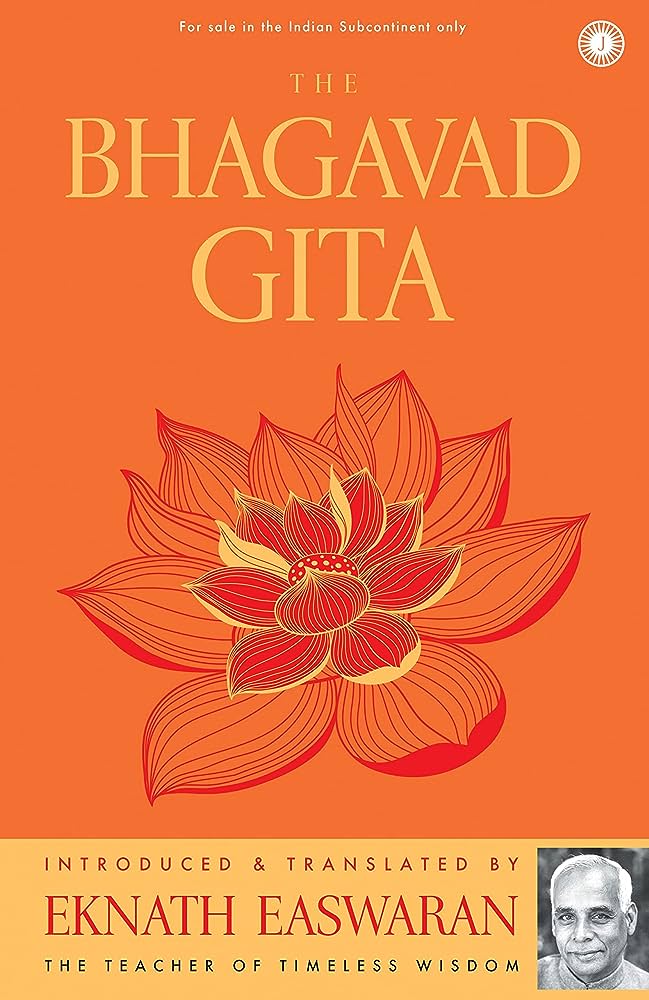
The Bhagavad Gita By Eknath Easwaran
The Bhagavad Gita By Eknath Easwaran
Couldn't load pickup availability
The Bhagavad Gita by Eknath Easwaran
The Bhagavad Gita by Eknath Easwaran is a widely appreciated translation and interpretation of one of the world's most influential spiritual classics. Set on the battlefield of Kurukshetra, the Bhagavad Gita presents a profound dialogue between Arjuna and Krishna about duty, action, self-knowledge, devotion, meditation, and the search for lasting inner peace. Eknath Easwaran's accessible approach makes the timeless teachings of the Gita approachable for modern readers while preserving the depth and spiritual significance of the original text.
The Bhagavad Gita, often simply called the Gita, is a central text of Hindu philosophy and Indian spiritual literature. Its teachings address questions that remain relevant across generations: How should we act when faced with difficult choices? How can we perform our responsibilities without becoming consumed by their results? What is the nature of the self? How can we overcome fear, attachment, anger, and confusion? What does it mean to live a meaningful and spiritually grounded life?
A Timeless Guide to Life and Self-Understanding
At the beginning of the Bhagavad Gita, Arjuna faces a profound moral and emotional crisis. Confronted with the prospect of fighting people he knows and loves, he becomes overwhelmed by doubt and uncertainty. Krishna responds by guiding him through a wide-ranging exploration of life, responsibility, consciousness, action, and spiritual realization.
Through this dialogue, readers encounter some of the foundational concepts of Bhagavad Gita philosophy, including dharma, karma yoga, jnana yoga, bhakti yoga, meditation, detachment, and the nature of the Self. Rather than presenting spirituality as something separate from everyday life, the Gita explores how ordinary responsibilities can become part of a deeper spiritual discipline.
Eknath Easwaran's translation is particularly suited to contemporary readers looking for an accessible introduction to the text. His presentation helps readers engage with the Gita as both a philosophical work and a practical guide to living with greater awareness and purpose.
The Teachings of Krishna and Arjuna
The conversation between Krishna and Arjuna forms the heart of the book. Krishna addresses Arjuna's confusion by explaining different approaches to spiritual growth and the importance of performing one's responsibilities with clarity and selflessness.
One of the Gita's most enduring themes is action without attachment to results. The text explores how people can carry out their duties sincerely without allowing success, failure, praise, or disappointment to completely determine their inner state. This teaching has made the Bhagavad Gita relevant not only to spiritual seekers but also to readers interested in personal development, mindfulness, leadership, ethics, and purposeful living.
The dialogue also examines the relationship between knowledge and action, suggesting that understanding one's deeper nature can transform the way one approaches everyday responsibilities. Krishna's teachings gradually move Arjuna from confusion toward a greater understanding of his situation and his responsibilities.
Karma Yoga and the Path of Selfless Action
Karma Yoga, the yoga of selfless action, is one of the central themes of the Bhagavad Gita. The text explores how action can become a spiritual practice when it is performed without excessive attachment to personal rewards.
This idea has enduring relevance in modern life. People often experience stress because they become deeply attached to outcomes, recognition, achievement, or failure. The Gita offers a different perspective by emphasizing sincere effort, responsibility, discipline, and inner balance.
For readers interested in karma yoga, the book provides an opportunity to explore how work and responsibility can be approached as part of a spiritual path. Its teachings can inspire reflection on professional life, family responsibilities, personal goals, and the way people respond to circumstances beyond their control.
Meditation, Discipline, and Inner Peace
The Bhagavad Gita also discusses meditation and control of the mind. Krishna describes the importance of developing inner discipline and cultivating a steady mind. These teachings have contributed to the continuing interest in the Gita among readers exploring meditation, mindfulness, yoga philosophy, and spiritual practice.
The book encourages readers to look inward and examine the forces that influence their thoughts, emotions, desires, and actions. By developing greater awareness and self-discipline, the individual can move toward greater stability and freedom from destructive patterns.
For modern readers seeking a deeper understanding of Indian philosophy and meditation, Eknath Easwaran's Bhagavad Gita can serve as an accessible entry point into these profound ideas.
Bhakti, Devotion, and Spiritual Connection
Another major dimension of the Bhagavad Gita is bhakti, or devotion. Krishna presents devotion as a path through which individuals can orient their lives toward the Divine. The text explores surrender, faith, love, remembrance, and the relationship between the individual and the ultimate reality.
Alongside karma and knowledge, devotion represents another major approach to spiritual realization. The Gita does not reduce spiritual development to a single practice; instead, it explores several interconnected paths that can guide a person toward greater understanding and inner transformation.
The Nature of the Self
Questions about the Self, consciousness, life, death, and spiritual identity are central to the Bhagavad Gita. Krishna teaches Arjuna to look beyond the temporary circumstances of physical existence and consider the deeper spiritual nature of the individual.
These philosophical teachings have made the Gita an enduring subject of study for scholars, philosophers, spiritual teachers, and readers around the world. Its discussions of consciousness and the Self continue to inspire reflection on what it means to be human and how one should live.
Eknath Easwaran's Approach
Eknath Easwaran was known for presenting Indian spiritual teachings in a clear and practical manner for contemporary audiences. His work with the Bhagavad Gita aims to make the text understandable to readers who may not have extensive prior knowledge of Sanskrit or Indian philosophy.
His translation and accompanying interpretation emphasize the practical significance of the teachings. Readers can approach the Gita not only as an ancient religious text but also as a source of reflection on daily life, relationships, work, ethical choices, personal discipline, and spiritual growth.
This accessibility makes the book suitable for both newcomers and readers who have previously encountered the Bhagavad Gita and want to explore its teachings from another perspective.
Why Read The Bhagavad Gita?
The enduring appeal of the Bhagavad Gita lies in its ability to address universal human concerns. Although its setting belongs to ancient India, its questions about duty, uncertainty, responsibility, fear, attachment, purpose, and spiritual understanding remain relevant.
Readers may explore the book for different reasons. Some may approach it as a work of Hindu scripture, while others may be interested in Indian philosophy, spirituality, meditation, yoga, ethics, personal growth, or comparative religion. The text can also be read as a philosophical dialogue about how human beings can respond to difficult situations with greater wisdom and composure.
Who Should Read This Book?
The Bhagavad Gita by Eknath Easwaran is especially relevant for:
-
Readers interested in Hindu philosophy and spirituality
-
Students of Indian philosophy and religious studies
-
People exploring meditation and mindfulness
-
Readers interested in yoga philosophy
-
Those studying karma yoga, bhakti yoga, and jnana yoga
-
Readers interested in self-knowledge and personal development
-
Students researching the Bhagavad Gita and Krishna's teachings
-
People exploring spiritual classics and sacred literature
-
Readers interested in ethics, duty, responsibility, and purposeful living
-
Anyone seeking an accessible introduction to one of India's most influential philosophical texts
A Lasting Spiritual Classic
The Bhagavad Gita by Eknath Easwaran brings an ancient spiritual conversation into a form that modern readers can explore with clarity and reflection. Through the dialogue between Krishna and Arjuna, the book examines profound themes such as dharma, karma, selfless action, meditation, devotion, wisdom, detachment, consciousness, and liberation.
Whether read as a sacred text, a philosophical work, a meditation on human responsibility, or a guide to spiritual living, the Bhagavad Gita continues to invite readers to examine their relationship with themselves, their responsibilities, other people, and the larger reality of existence.
For anyone searching for an accessible Bhagavad Gita translation, a guide to Krishna's teachings, an introduction to Hindu philosophy, or a classic work on spiritual wisdom and self-realization, Eknath Easwaran's The Bhagavad Gita offers a meaningful opportunity to engage with one of India's most enduring spiritual texts.
Our customer's Reviews:
Thank you grey.np for quick delivery and for the bookmarks as well
- stutisinghbasnet -
-
Exchange Policy
For Any Damages Or Quality Issues We Do Make an Exchange For Upto 30 days From Date Of Delivery.
-
Social Impact
For Every 1 Order Placed We Contribute 1 Meal to Our Family From Old Age Homes
-
Delivery Timing
The Delivery Will Be Within 48 hours If Not Same day.
-
Customer Support
Call and message support is available between 10 am- 6 Pm, Sunday To Friday.